
Layne shares College's Vision for Expanding Access to Emerging Technology at Global Conference
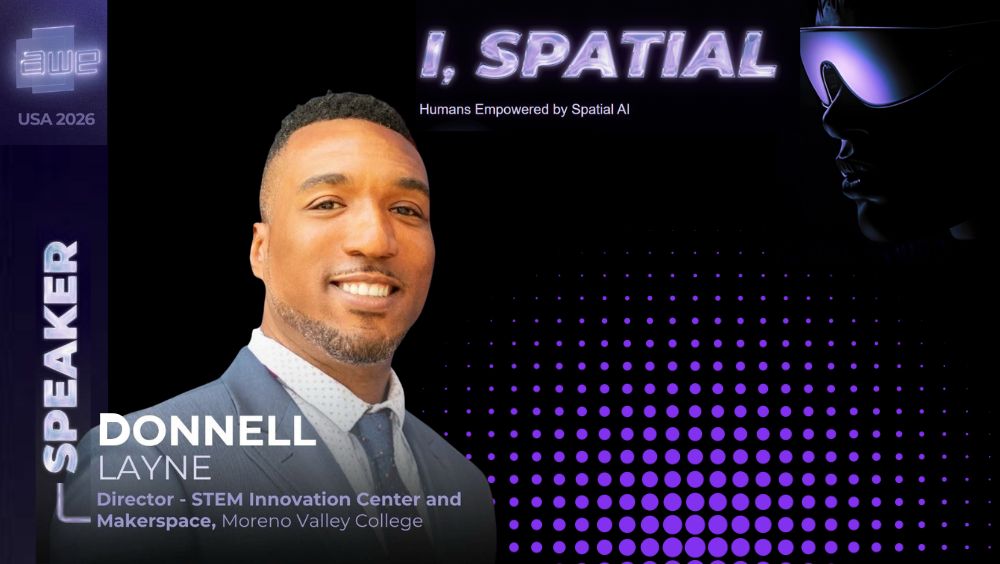
Donnell Layne still remembers what it felt like to sit in a classroom and wonder if a place like Cornell or Northwestern was meant for someone like him. Now, as director of the STEM Innovation Center and Makerspace, he spends his days making sure his students never have to wonder the same thing.
Layne joined a panel of educators and industry leaders at AWE 2026: I, Spatial, held June 15 through 18 at the Long Beach Convention Center, one of the world's leading XR and AI conferences. His session, Strategies for Innovation: XR + AI Infrastructure and Implementation for Community Colleges, brought together voices from XRconnectED, St. Louis Community College, and the California Community Colleges Chancellor's Office to discuss how two-year institutions can build lasting technology programs, not just acquire new gadgets.
For Layne, success has never been measured by the number of devices on campus.
"The biggest barrier is not just access to the technology," he said. "It is the lack of a complete ecosystem around the technology." Institutions can buy headsets and software, he explained, but without infrastructure, training, staffing and faculty confidence, those tools rarely reach students in a meaningful way.
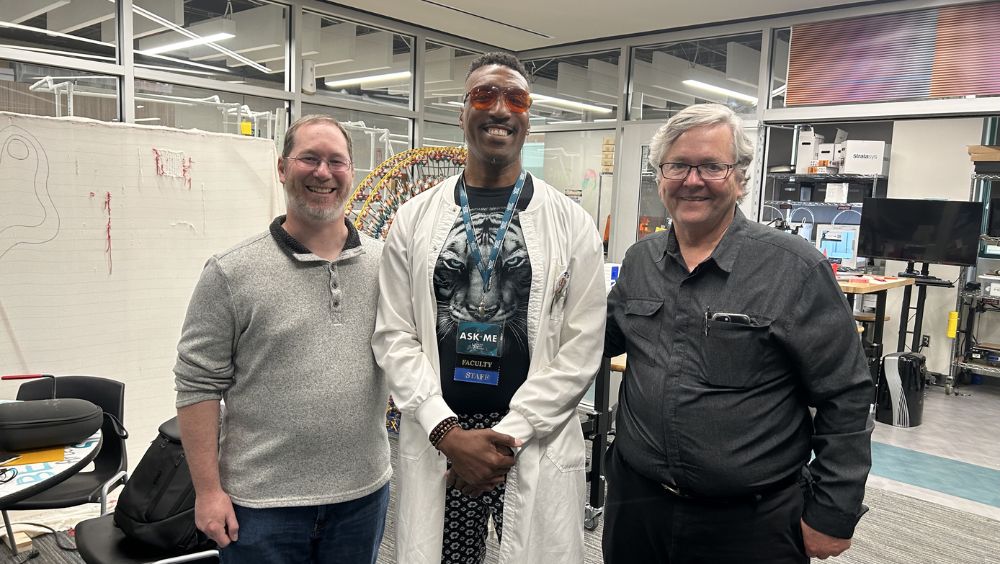
At Moreno Valley College, that ecosystem takes shape through the iMAKE Innovation Center, where 3D printers, laser cutters, CNC machines, VR systems, robotics and AI tools sit alongside the staff and curriculum needed to put them to use. Layne, a California Community Colleges AI Fellow, has helped raise more than $12 million to build that access, funding that he said does more than stock a room with equipment.
"It creates belief," he said. "When students see that their community college has access to the same types of tools being used in advanced manufacturing, design, engineering, media, entrepreneurship and artificial intelligence, it changes how they see themselves." Innovation stops feeling like something that happens somewhere else and becomes something students can lead.
That philosophy extends beyond MVC's campus. Alongside Kim Carter-Tillman, D.Min., Ed.D., Layne co-founded the Kinetic AI Hub in San Bernardino, described as the Inland Empire's first applied AI training center. He built it, he said, to close the space between hearing about artificial intelligence and actually knowing how to use it.
"Small businesses, nonprofits, educators, public agencies, entrepreneurs and community members are all trying to understand what AI means for their work, but many do not have a trusted place where they can learn by doing," Layne said. "The mission is not just to teach people about AI. The mission is to help people build with AI, lead with AI, and use AI to create real value in their communities."
It is not about replacing instruction, he said, but reaching the parts of learning that instruction alone cannot.
"Some things need to be seen. Some things need to be felt. Some things need to be practiced," he said. For a student who has never pictured themselves as an engineer or a technologist, the chance to build and test something with their own hands can open a door. "It allows them to say, 'I can do this.' That moment is powerful."
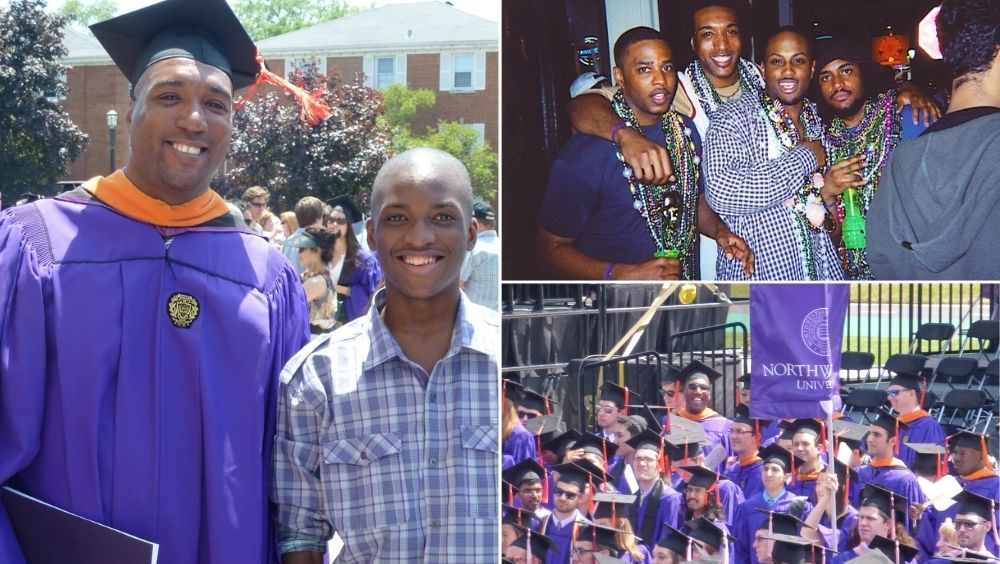
Layne is candid about why this work matters to him specifically at a community college. He earned degrees from Cornell and Northwestern, but he does not want those campuses to feel like distant dreams for the students he serves now.
"My students are me, and I am my students," he said. "I want our students to understand that they belong in every room where innovation, research, technology and leadership are happening." What makes the work powerful, he said, is not the prestige of a degree but hard work, discipline and a refusal to accept that opportunity belongs only to a select few. "Excellence is not reserved for somewhere else. It can be built here, by us, for us, and with us."
That belief is already taking physical form. Among Layne's current projects is the MVC Humanoid Robot Project, inspired by open-source humanoid robotics research out of UC Berkeley but built from the ground up by MVC students and staff. Participants work through every layer of the build, from design and fabrication to electronics, programming, computer vision and troubleshooting.
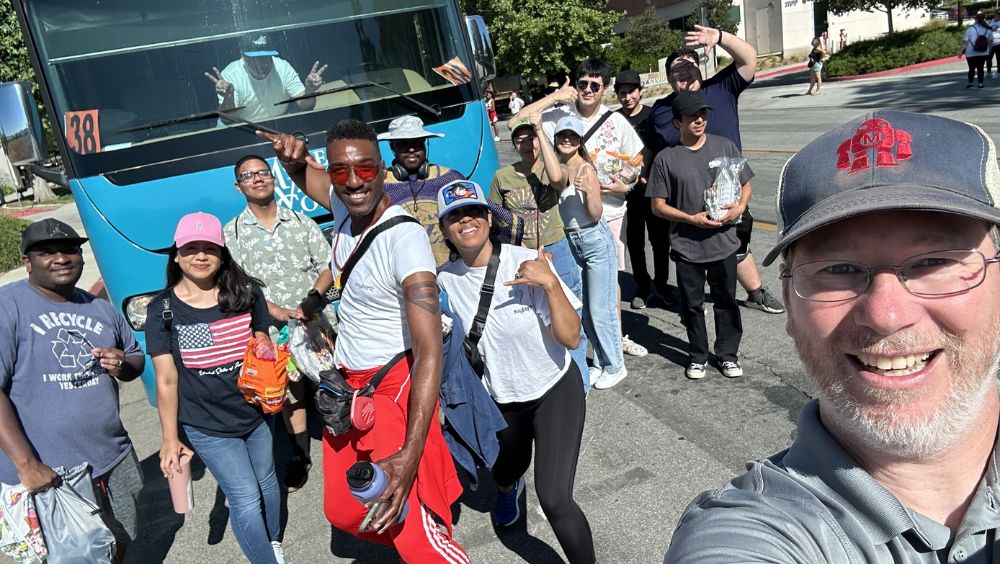
"Our students are not just watching the future happen somewhere else," Layne said. "They are building it themselves at Moreno Valley College."
Layne said the conversation around XR and AI has matured beyond flashy demonstrations and futuristic devices, toward a more important question: how these tools actually improve learning, work and human capability.
"We have the ability to take emerging technology out of exclusive spaces and bring it into the hands of students, faculty, workers, entrepreneurs and communities that need access the most," he said. "Community colleges should not be the last institutions to receive emerging technology. With the right support, we can become the places where society learns how to use these tools responsibly, inclusively and powerfully."