
Barn Owls Take Flight on Moreno Valley College Campus
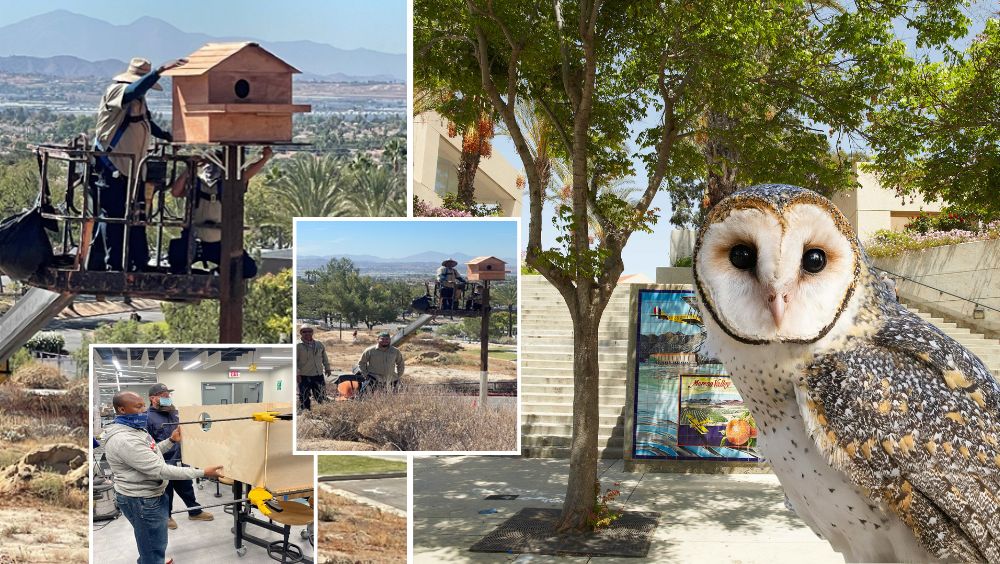
Moreno Valley College is advancing its approach to environmental stewardship by welcoming a new team of nocturnal specialists: barn owls. This innovative initiative marks a shift in the college’s Integrated Pest Management (IPM) strategy, which is an ecosystem-based approach focused on long-term pest prevention through biological controls and habitat manipulation rather than traditional chemical pesticides.
The project was catalyzed by Ron Kirkpatrick, director of facilities, who holds specialized licensing in pesticide application. While Kirkpatrick completes regular continuing education through the Pesticide Applicators Professional Association (PAPA), a recent training session featuring Rebecca Dmytryk, CEO of Humane Wildlife Control Inc., sparked a more sustainable vision. Dmytryk presented a method of controlling rodent populations, including rats, mice, voles, and gophers, by encouraging the presence of the barn owl (Tyto alba).
The transition is an environmental necessity. Anticoagulant rodenticides, which cause death in pests through internal bleeding, often turn predators into secondary targets; studies have found these toxins in 91% of post-mortem barn owls. By introducing these natural predators, the facilities department aims to reduce or eliminate the use of anticoagulants on campus.
A single barn owl is capable of consuming approximately 1,500 rodents per year. To attract these efficient hunters, the college turned to its own experts in the career and technical education (CTE) and Maker Space teams. Donnell Layne and Joseph Murray brought Dmytryk’s highly effective owl box design to life, fabricating a custom nest using the Moreno Valley College iMake Innovation Center resources.
The team paid meticulous attention to the box’s technical specifications to ensure the survival of future owlets. The design features a specific depth and port positioning, a gable roof with integrated ventilation, and waterproofing. Strategic "climbing notches" were etched into the wood to help young chicks re-enter the box, and an exercise platform was included for fledglings as they prepare for flight.
The box is now mounted on a 20-foot pole east of the Mechanical II building. It is positioned facing north to avoid prevailing winds and equipped with a solar-powered game camera to monitor the owls’ progress.
“When our college police told me they’d seen the owls mating at night, I knew we’d done something right,” Kirkpatrick said. “It means they feel safe here. That’s exactly what we hoped for when we built this habitat.”
This collaborative effort, supported by additional MVC and RCCD team members Julio Cuz, Brian Thomas, Hector Carbajal Santana, Joey Botello, Julio Hernandez, and Theo Mabon, reflects a modern vision for campus operations. By blending high-tech fabrication with wildlife management, Moreno Valley College is proving that the most effective solutions to modern challenges are often found by working in harmony with nature.